Musetti-Zverev: who goes through?

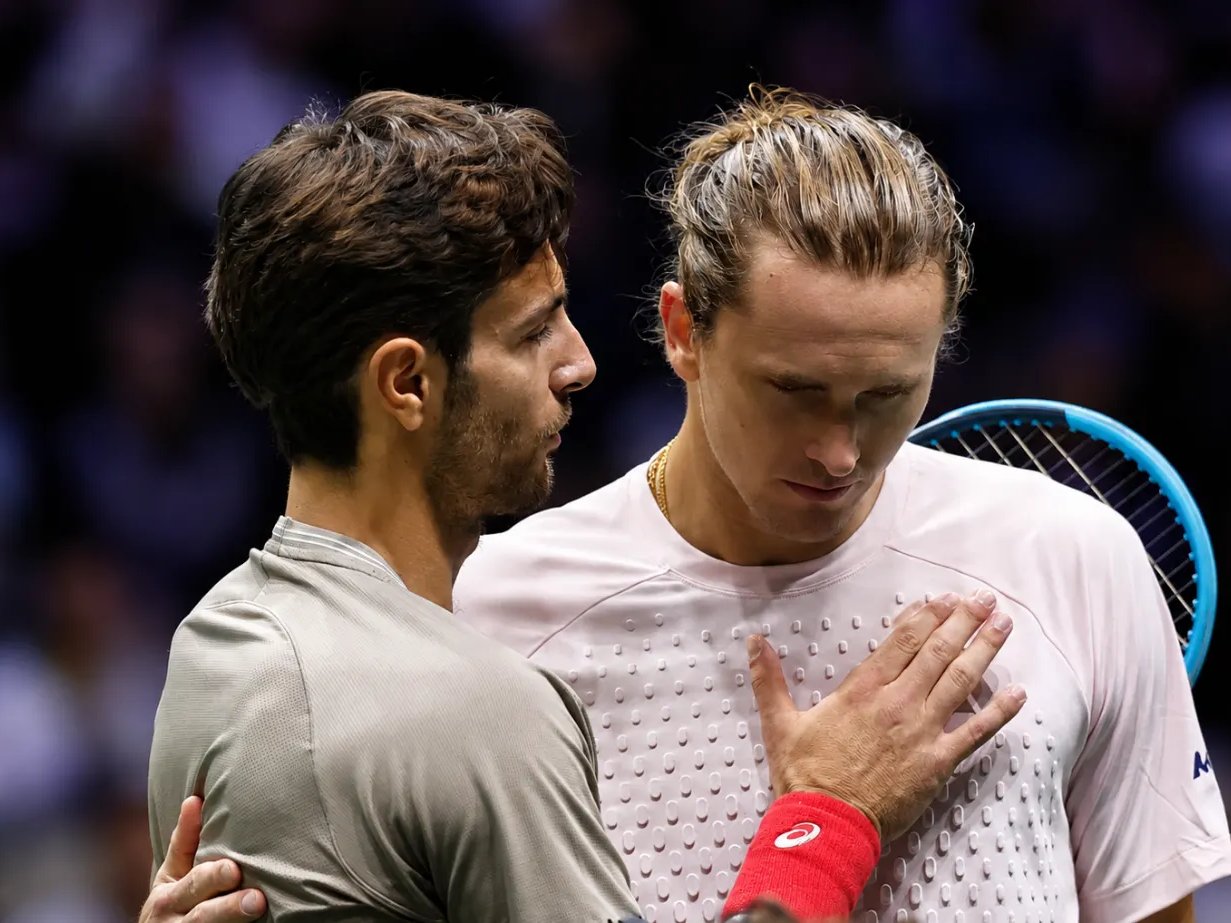
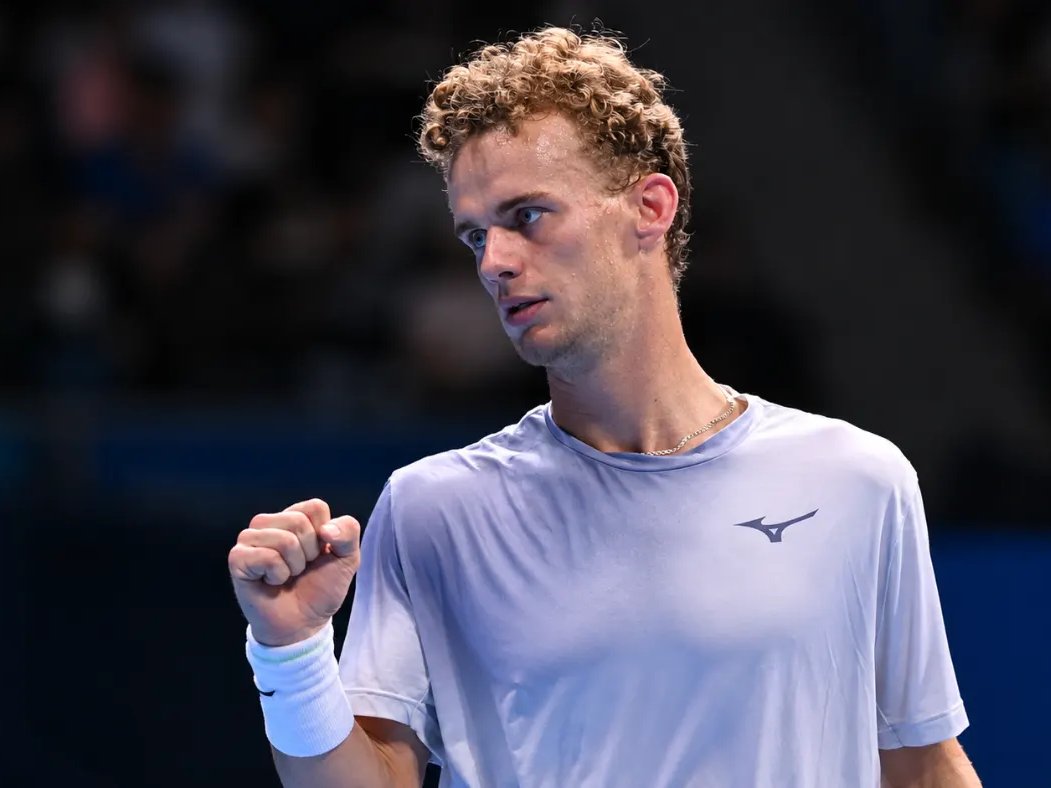
Alexander Zverev makes his debut as world No. 1 in the second round of the Rolex Paris Masters, after a first-round bye as top seed, against Lorenzo Musetti, who beat Hubert Hurkacz 7-6(3), 7-6(10). The German starts as the favorite. But the gap in the rankings (Zverev No. 1, Musetti unseeded) overstates the difference on this surface: if the Plenitude Arena plays as it did in 2025, a slow court with a low bounce takes away part of Zverev's serving margin and shifts the match to the rally, where Musetti has beaten him three times in their five previous meetings.
Zverev's serve on a court that slows the ball
Their last meeting shows what happens when the German's serve is working. Vienna semifinal 2025, 6-4, 7-5 with nine aces.
Paris played differently last year. The organizers slowed the court by almost a quarter compared with 2024, according to the speed index. Zverev described it this way:
"It's very slow and the ball doesn't bounce much. [...] If you hit hard, the ball loses speed."
For Musetti, the gain comes on return. The Italian returns from well behind the baseline. On a fast court that position leaves him late on wide first serves; here it gives him time to get the ball back deep and start the rally on level terms.
On serve, he needs to repeat what he did against Hurkacz: no break conceded, the only break point of the match saved, 13 unforced errors against the Pole's 26. Two sets without a break against a server like Hurkacz are the minimum foundation for this match.
The backhand diagonal with the low ball
The exchange that decides the match runs through the backhand diagonal. Zverev's two-handed backhand is his most reliable shot, and under normal conditions he uses it to push the ball above Musetti's shoulder, the height where the one-handed backhand loses weight and becomes a defensive shot.
On a court with a low bounce, that leverage shrinks. Musetti's backhand slice stays below the knee and forces a player of almost two meters to bend on every shot. Zverev described this too a year ago: with spin, the ball stays low here.
The two previous meetings in Vienna show where the line falls. In the Vienna quarterfinal in 2024, Musetti came back from a set down and won 2-6, 7-6(5), 6-4 in over two and a half hours. In the 2025 semifinal, Zverev finished in a little over an hour and a half. When the match stays on serve, the German wins; when it stretches out, the Italian gets into it.
The physical cost for the No. 1
Zverev arrives in Paris after a heavy week in Vienna. In the first round he saved four match points against Martin Landaluce and won the third-set tiebreak 13-11; in the semifinal he lost to Alex de Minaur 6-4, 1-6, 7-6(4).
The Paris precedent weighs on him. In 2025 the slow court demanded two hours and thirty-two minutes for him to beat Daniil Medvedev in the quarterfinals, saving two match points; the next day, visibly struggling physically, he lost 6-0, 6-1 to Jannik Sinner. On this surface long matches cost more than usual, and Musetti is the player who looks for them.
The Italian arrives with a fresh title: on Sunday, October 25, he won in Lyon, 6-3, 6-4 over Taylor Fritz, his first title in four years. In Vienna he went out in the second round against Arthur Fery, in three sets.
The prediction, and what could overturn it
Zverev starts with a slight edge, far from the clear favorite the rankings suggest. His serve gives him a floor that Musetti doesn't have, and in a best-of-three one break and one tiebreak can be enough. Musetti has a narrower path: hold serve at low cost, take Zverev to the backhand diagonal with the low ball, and lengthen the rallies.
The signal to watch comes early, in the German's service games. If Musetti has already seen break points by the middle of the first set, the court is working for him and the match becomes a toe-to-toe contest. If Zverev closes out the first set without conceding any, the No. 1 wins in two sets. A court faster than in 2025 would take away the Italian's main lever.