Ruusuvuori, ten months counted in mornings
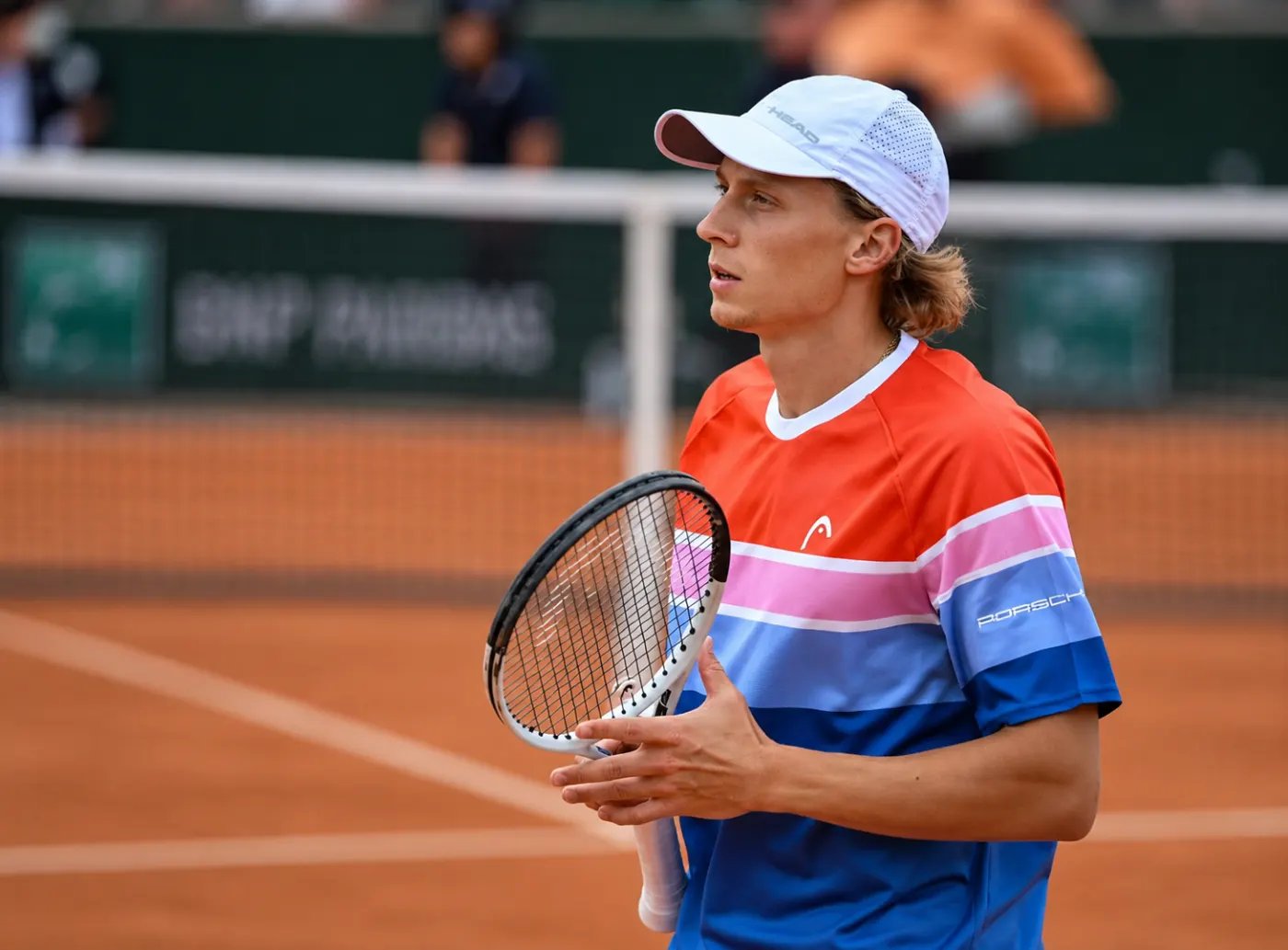
Tennis counts time in weeks. Fifty-two for the ranking, one per tournament, at least six months out to qualify for a protected ranking. For ten months, Emil Ruusuvuori counted it in mornings.
"For the past ten months I have lived every day with physical pain, without knowing when I woke up what my back would allow me to do that day."
He wrote it on Instagram in early October, after surgery in New York: a spinal disc replaced with a prosthesis. He is 27. He has not played an official match since November 2025. Three and a half years ago he was world No. 37.
What he had built
At twenty, in the Davis Cup, Ruusuvuori beat Dominic Thiem, then world No. 5, 6-3 6-2. In March 2023 he reached the quarterfinals in Miami, his first at a Masters 1000, where Jannik Sinner stopped him. On April 3 he hit his career-high ranking. In June, on the grass of 's-Hertogenbosch, he took his revenge: 6-3 6-4 over Sinner, winning all 29 points he played behind his first serve. In November, in Malaga, Finland reached the first Davis Cup semifinal in its history. He was the top-ranked Finn, but a shoulder problem kept him out of the quarterfinal against Canada; he came back for the semifinal against Australia.
2024 had started even better. A final in Hong Kong, lost to Andrey Rublev. His 100th tour-level win at the Australian Open, the second Finn to get there after Jarkko Nieminen. At Wimbledon, in the second round, he knocked out Stefanos Tsitsipas, the No. 11 seed, and reached his first Wimbledon third round.
It was the profile of a top-50 player, with the shots and the body to stay there for a long time.
The match he does not remember
He lost that Wimbledon third round in four sets to Giovanni Mpetshi Perricard. In May 2025 he wrote:
"I can hardly remember anything about the last match of Wimbledon last summer."
The panic attacks had been going on for years. The first one came in Miami. In 2024 they got worse and reached him away from the court too, even while he was driving.
"I would wake up sweating with my heart pounding, and I couldn't breathe. It made me think I was going crazy."
In August he withdrew from the US Open. On September 4 he ended his season to take care of his physical and mental health, and in the same announcement he summed up the problem in an accountant's sentence:
"I have achieved things I have dreamed of since I was a child, but the balance between work and recovery has not been right."
For four and a half months he barely touched a racquet.
He came back in February 2025, at the Tenerife Challenger. In May he told the whole story, including a new attack he had in South Korea. In August he showed up at the US Open on a protected ranking, despite being world No. 752, three weeks after deciding to start training again. "We're jumping straight into the deep end," he said on the eve of the tournament, adding that he felt much freer than during his first attempt at a comeback. He lost in the first round to Alexei Popyrin, 6-3 6-4 7-6.
Ten months of mornings
Autumn 2025 is the last chapter on court. In Helsinki, at his home Challenger, he loses in the second round to Otto Virtanen, the compatriot who is now Finland's No. 1. In mid-November he plays the first round of the Bergamo Challenger against Francesco Maestrelli and loses 6-4 3-6 7-6(3). Maestrelli would go on to win the tournament that week.
Then, for almost a year, no matches. The explanation only came with the October message.
"I haven't really talked about what's been going on behind the scenes, but after a successful surgery it feels like the right time to share it."
The back pain was with him every day and kept him from moving and competing the way he had all his life. In the end, together with his doctors, he opted for disc replacement. It was Sebastian Korda who pointed him to the surgeon, Sheeraz Qureshi. In the photos posted after the operation, Ruusuvuori is in a hospital bed and walking with the help of a walker.
A disc prosthesis, unlike a spinal fusion, is meant to preserve movement in the operated segment. For a tennis player that matters, because every serve, every forehand and every two-handed backhand starts with a rotation of the trunk. No one has set a return date, and he himself speaks of rehabilitation step by step.
What remains
Today his ranking puts him beyond 800th place. It is the least meaningful number on his profile.
The wins remain: Thiem at twenty, Sinner without losing a point behind his first serve, Tsitsipas at Wimbledon, a hundred matches won on the main tour. And so does the way he went through both crises. Both times he stayed silent for a long time, and both times he eventually told the whole story without softening anything. In 2025 he explained why:
"If my story helps even one person, then it will be worth it."
For two years his days were decided first by panic, then by his back. Tennis, with its fifty-two weeks, can wait a few more mornings.