Shelton-Jodar: the second serve decides the group
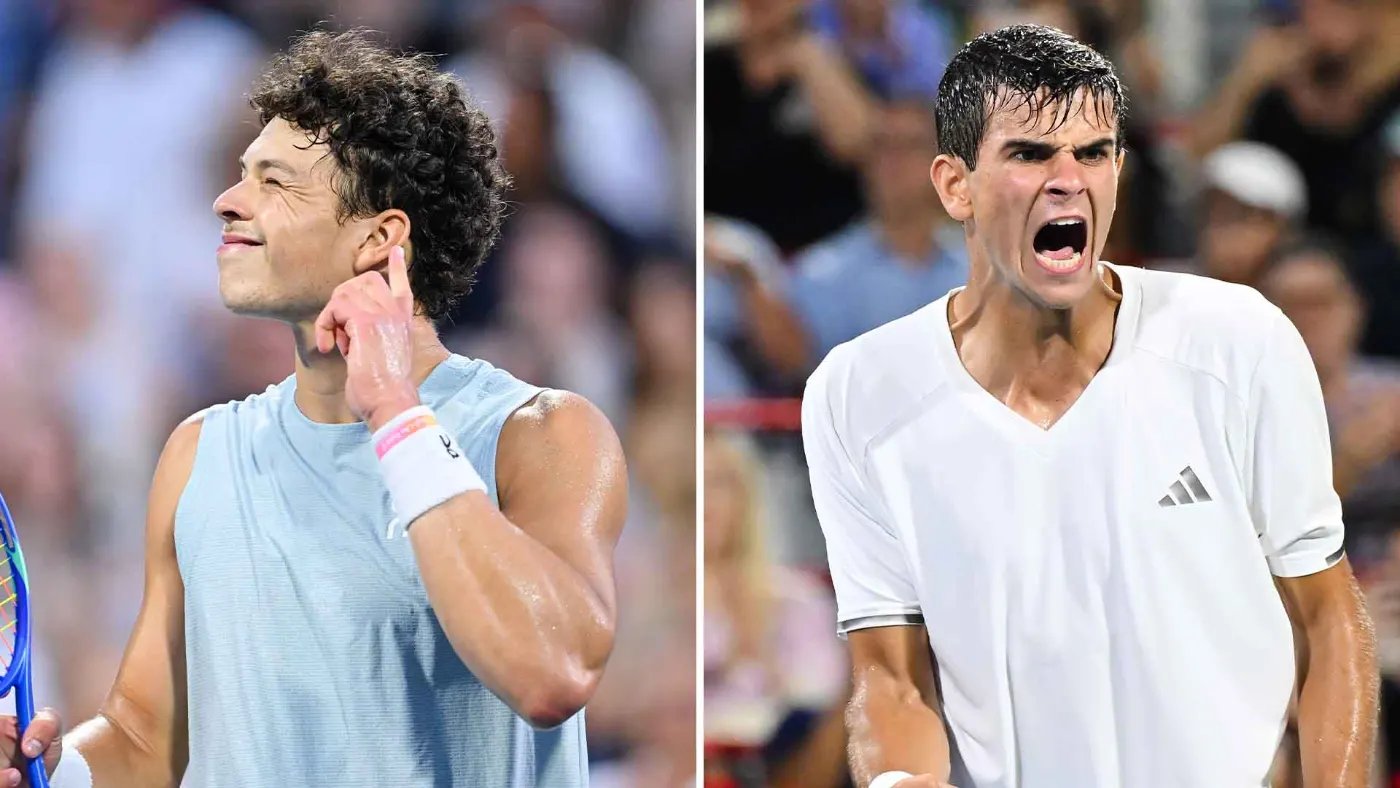
Ben Shelton and Rafael Jodar close out their John McEnroe Group campaign at the Nitto ATP Finals with their third match, in their first career meeting. Shelton starts as the favorite, but Jodar's best shot, the aggressive return on the second serve, targets the most exposed side of the American's serve. The match will turn on the service games in which Shelton misses his first serve.
The standings make the score matter too. Alexander Zverev leads on 2-0, Shelton and Arthur Fils are on 1-1, Jodar on 0-2. If Shelton wins and Zverev beats Fils, the American goes through. If Fils beats Zverev instead, three players finish on two wins and it goes to the tiebreakers: percentage of sets won and, if two players are still level, head-to-head. Jodar stays alive only by winning, with Zverev beating Fils and once again the percentage of sets won acting as referee.
The main variable: Shelton's second serve
On Sunday against Fils, in a central phase of the match Shelton lost just one point out of twelve played on his second serve. On Tuesday against Zverev he lost 6-2, 7-6(4) and won just 40% of the points on his second serve, against the German's 64%. His first serve went better: 72% of first serves in and 71% of points won. In Turin, then, Shelton's margin depends on the serve that comes after the miss.
Jodar has built his season on exactly that kind of ball. He returns the second serve from inside the court and drives it deep: in 2026 he was seventh on tour for return points won against the second serve (52.4%). In Turin it has not been enough: he lost 6-4, 6-4 to Zverev and, after winning the first set, 4-6, 6-2, 6-2 to Fils.
A lefty's kick second serve, on the ad side, climbs toward a right-hander's backhand. Here that means Jodar's backhand. If Jodar can take that ball on the rise, instead of absorbing it at shoulder height, Shelton's service games stop being a formality.
The diagonals between a righty and a lefty
In baseline rallies the geometry is crossed. Jodar's crosscourt forehand lands on Shelton's backhand; Shelton's crosscourt forehand lands on Jodar's backhand.
Shelton expected Fils to go after his backhand on Sunday, and Fils won the second set. After the match Shelton pointed to his backhand as the key to the win. Jodar can repeat that plan with his most natural pattern: the heavy forehand, which spins at an average of 3,128 revolutions per minute; according to one analysis, only Fils hits it with more spin and power on tour.
The risk for Jodar lies in how that forehand holds up when the rally is neutral. Whoever holds the forehand-to-backhand diagonal better without forcing the down-the-line shot will win.
Jodar's moment
Jodar reaches the third match of the group at 0-2, with qualification also tied to the result of Zverev-Fils. Against Fils he held his level for one set, then lost the second and third 6-2, 6-2. He will play on a court that Shelton describes as slightly faster than Paris, where a lapse of that length against a big server ends the match.
If Jodar can't keep up the pace for the whole match, he loses the two things he needs to break Shelton's serve: returning from inside the court and holding the baseline diagonal.
Shelton is the favorite, because of his serve and his opponent's form, and has a good chance of closing it out in two sets. The prediction falls apart if Jodar keeps up his first-set level against Fils for the whole match and pushes Shelton below half of his second-serve points won: in that case the match goes to a third set and Shelton's backhand comes back under pressure in the diagonal. The first indicator to watch is Shelton's second-serve points in his first four service games.