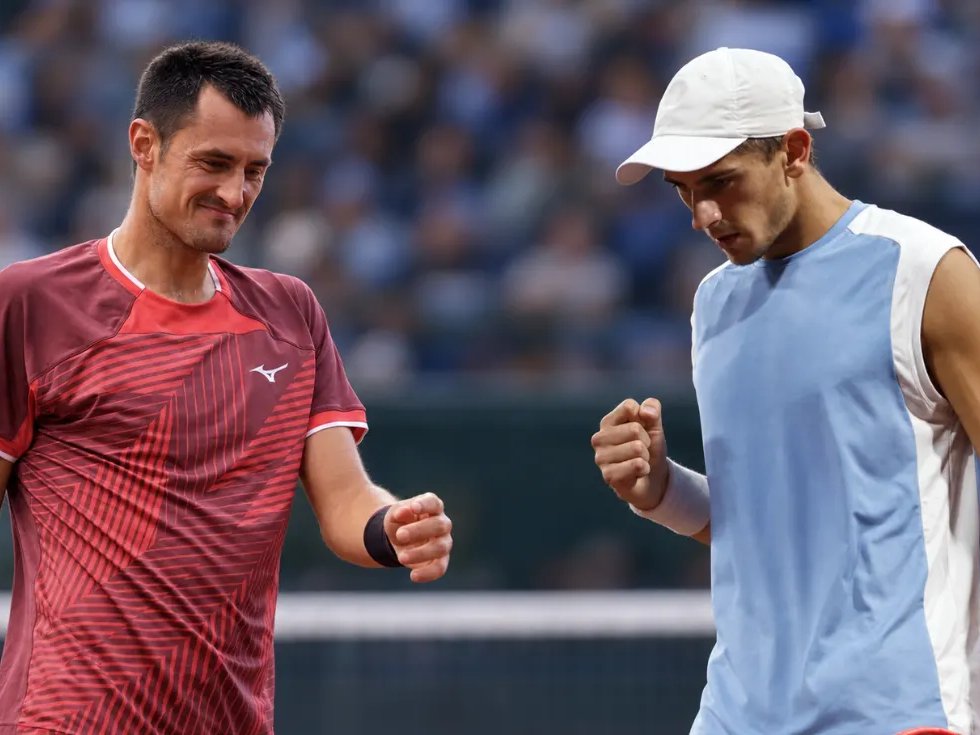
Djokovic-Hurkacz in Shanghai: the 8-0 runs through tiebreaks
Novak Djokovic and Hubert Hurkacz meet on Friday in the second round in Shanghai, and the Serb leads the head-to-head 8-0. That score hides much closer matches: at Wimbledon 2023 and in Geneva 2025 Djokovic won all four tiebreaks he played against him. Friday's match will again be decided in the few points where Hurkacz's serve is not enough, and this time both men arrive with physical question marks.
Hurkacz's serve takes the set to a tiebreak
Hurkacz comes in off 19 aces in his 6-3, 7-6(4) win over James Duckworth. It is his usual plan: hold serve quickly and take the set to the deciding games. Against Djokovic that plan has produced long matches. Never a win.
The textbook case is Wimbledon 2023, in the round of 16. Hurkacz hit 33 aces, missed three set points in the first-set tiebreak, lost both tiebreaks 8-6 and dropped serve for the first time in the tournament only in the fourth set. Djokovic won 7-6, 7-6, 5-7, 6-4. In Geneva 2025, on clay, the script was the same: Hurkacz won the first set and was up a break in the third, then lost 5-7, 7-6(2), 7-6(2).
The technical reason is the return. Against Hurkacz's first serve, Djokovic blocks the ball back deep down the middle. He accepts losing many return points so that he can play the important ones from inside the rally, where the Pole is less solid. In a tiebreak a single mini-break is enough, and a mini-break almost always comes on the third or fourth shot.
The Zverev template
The most useful precedent is from four days ago. In the Beijing quarterfinals Djokovic beat Alexander Zverev, the top seed, 4-6, 6-4, 6-4 in more than two and a half hours, while facing 19 aces. He broke twice, both times at 5-4: the German was serving to stay in the set and gave it up right there.
Against Hurkacz he needs the same pattern. Djokovic has to hold his own service games without conceding break points and wait for the game in which his opponent serves from behind on the scoreboard. In Beijing he said he tried to be aggressive, come to the net and change the rhythm. Against a big server, net attacks shorten his own service games and leave more energy for the return games.
Two bodies in question
Hurkacz retired from his Beijing semifinal against Alex de Minaur with the Australian leading 6-4, 3-2, because of an adductor problem. In Shanghai he said it is "getting better". Against Duckworth the serve held up. The real test comes on the second shot, when Djokovic sends the return back at his feet or crosscourt to the backhand and forces him to restart laterally. A limited adductor shows up in changes of direction, before it shows up in the speed of the first serve.
Djokovic has a question mark too. In Beijing he called the trainer in the first round against Nuno Borges and in the second against Bu Yunchaokete. After the Bu match he did not commit on the nature of the problem: he said it concerns "health" more than endurance. Then he won his seventh Beijing title without finishing either the semifinal (Daniil Medvedev's disqualification) or the final (de Minaur's retirement) on court. If the problem affects his serve, Djokovic loses the shot he needs to hold his service games without conceding anything.
Djokovic starts as the favorite because he returns better, plays tiebreaks better and faces an opponent who still has to show he can move well laterally. The edge is clear rather than overwhelming: the 8-0 matters, but the matches say tiebreaks and hard-fought sets. The prediction falls apart if Hurkacz wins the first-set tiebreak and Djokovic calls the trainer again. In that case the Serb's first serve loses depth, his service games get longer and the match moves onto the Pole's terrain.