Zverev-Bublik: the return decides the match
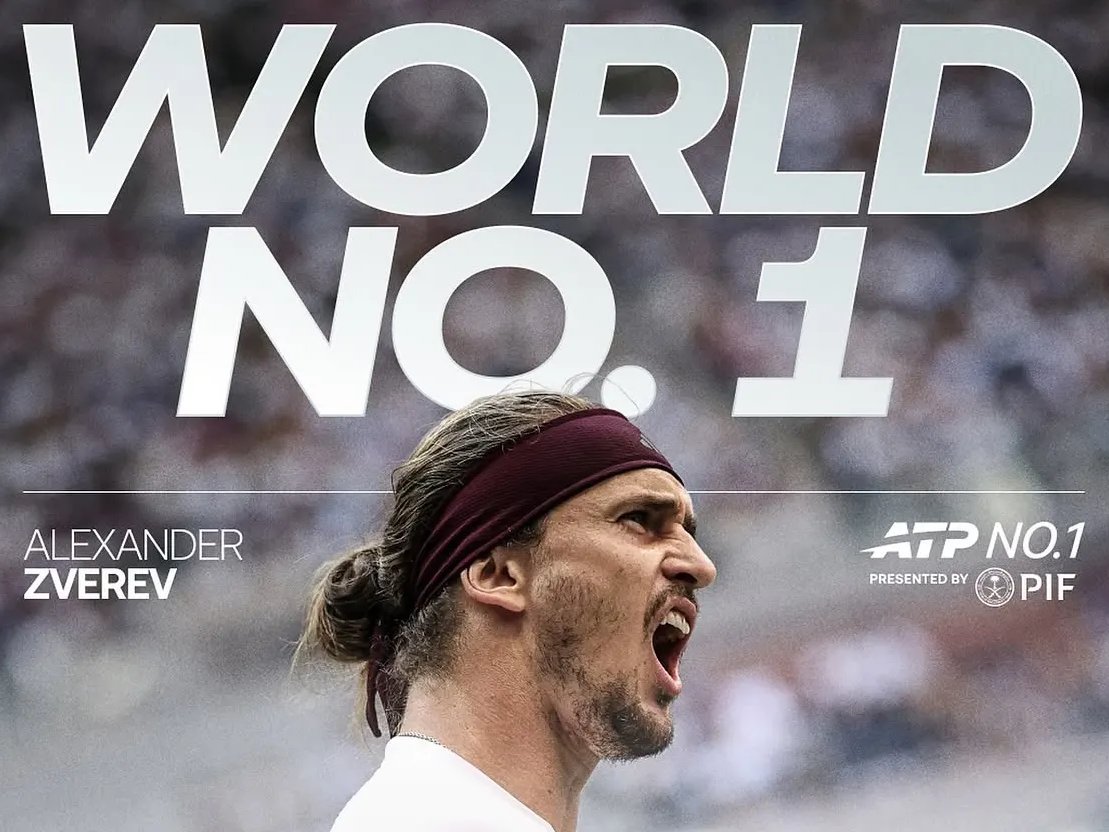
Alexander Zverev reaches the last 16 of the Shanghai Masters 1000 with his 60th win of the season, earned against Quentin Halys without facing a break point. A semifinal would guarantee him the year-end No. 1 ranking. Next up is Alexander Bublik, the No. 19 seed, who came from behind to beat Brandon Nakashima 6-7, 6-3, 7-6. On this court both will hold serve almost every time, and the match will go to whoever returns better in the few games where the other's first serve drops off. That is where Zverev starts ahead.
A court that punishes deep returners
Shanghai's Court Pace Index, measured by Tennis TV, is 42.2 this year, ten points above 2025 and the highest since 2017. The ball arrives sooner, and the serve wins a lot of points on its own.
Against Halys it showed in both directions. Zverev won 6-4, 6-7, 6-3 in two hours and 17 minutes with 19 aces and a single double fault, and never had to save a break point. On return he struggled far more: he converted two of the nine break points he created, and in the second-set tie-break he wasted two match points.
The key is position. Zverev returns from well behind the baseline, a choice that on slow hard courts gives him time to get even the heaviest first serves back in play. At this speed that extra meter costs him: the server can pull him off the court with the angle, or use all the space he leaves in front of him.
Bublik's serve and the space in front of Zverev
Bublik has the tools to exploit that space. He hits even his second serve almost like a first, uses the underarm serve precisely against deep returners and, when the rally gets longer, goes for the drop shot. Every one of these options forces Zverev to run forward.
The head-to-head reads 3-1 to Bublik, with two wins on indoor hard courts: Rotterdam 2021 and the 2022 Montpellier final, won 6-4, 6-3, the Kazakh's first ATP title. Zverev has won only once, at Monte Carlo 2023, on clay and from behind. Their last meeting was the Halle 2023 semifinal, 6-3, 7-5 to Bublik.
Those meetings are more than three years old, against a Zverev who had not yet won a Slam. In 2026 he has won two, Roland Garros and the US Open.
Ankle and hand
Both come in with a knock. On Friday, against Wu Yibing, Zverev fell while moving out wide after a backhand in the second set and appeared to turn his left ankle. He did not call for a medical timeout and closed it out in the tie-break, moving with relative freedom. Against Halys his serve did not suffer.
Bublik lost the first set against Nakashima in a tie-break, 9-7, after wasting two set points. He smashed his racket, hit the drinks cooler and cut his hand. He received a code violation warning, and the medical timeout was used to treat the cut. He went on to win the third-set tie-break 7-5, after two hours and 27 minutes.
Zverev starts as a clear favorite: against Halys he did not face a single break point on serve, and when his first serve goes in, Bublik has nothing to grab onto on return. The head-to-head pushes the prediction toward the Kazakh more than it deserves, but the value, if there is any, is on Bublik in one specific format: two tie-breaks, where the gap on return counts for little. The prediction falls apart if Zverev stays far behind the baseline even on Bublik's second serves and the ankle slows him down on drop shots. In that case the match becomes a string of tie-breaks, the ground on which Bublik beat Nakashima.