Djokovic-Zverev in Beijing: how the quarterfinal gets decided
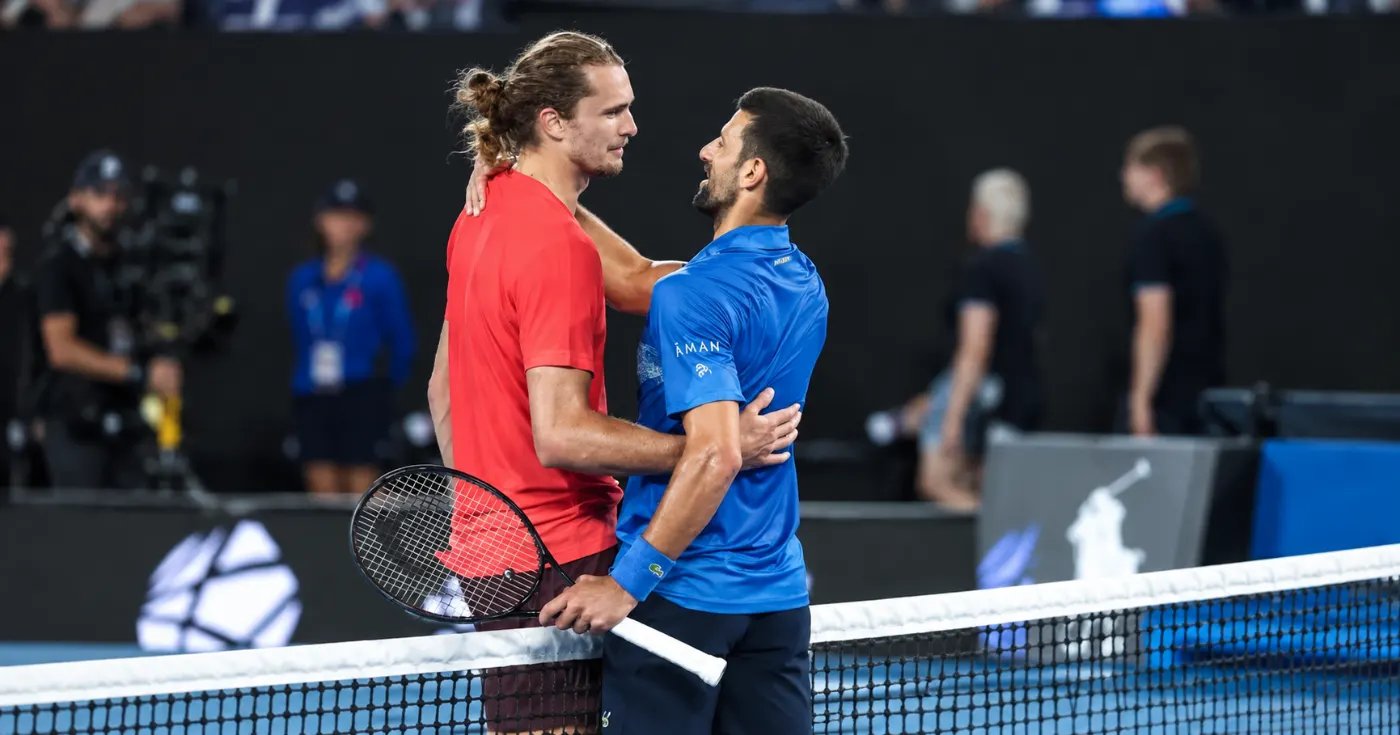
Novak Djokovic arrives at the China Open quarterfinals with the strangest record on tour: he has never lost in Beijing, and he hadn't played the tournament since 2015. He also arrives with the physio called on court in two consecutive matches, both times for the rib area. His quarterfinal against Alexander Zverev, who came through his round of 16 against wild card Juncheng Shang 6-0, 6-3, hinges on one variable alone: how many first serves Djokovic can land with his torso in that condition.
The ribs reach the serve before they reach the legs
A complaint in the rib cage affects the loading and the rotation of the trunk, which is exactly where the first serve comes from, long before it touches the legs. Against Nuno Borges, in the first round, Djokovic had already received treatment and still closed it out in two sets. Against Yunchaokete Bu, on Friday, it took a second treatment and all three sets to come through 4-6, 7-6(2), 6-2.
Three sets against a wild card ranked 104 in the world is the figure that matters more than any percentage.
On a medium-fast court like the one at the National Tennis Center, with a medium bounce and a ball that travels, Zverev's service game costs him little. Djokovic doesn't have the option of holding at 55% first serves and hoping to recover from the back of the court: every service game of his that turns into a fight is a game in which Zverev gets six or seven free returns and picks where to step in.
Djokovic has a plan, and it runs through Zverev's second serve
In the head-to-head Djokovic leads 9-5, and his wins always have the same shape: a deep return down the middle off the German's second serve, the rally pushed past the sixth shot, Zverev forced to make the decision himself. Cincinnati 2023 and the 2021 US Open semifinal are the same plan in two different climates.
Zverev has won when he has been able to play short tennis, indoors, where the serve is enough. His most recent success in the series is the 2025 Australian Open semifinal, when Djokovic stopped after one set. They haven't faced each other since Roland Garros 2025, sixteen months.
The problem with the plan is that it needs legs and a trunk to sustain long rallies over three potential sets, which is exactly the resource Djokovic has been spending for two matches.
The No. 1 ranking weighs on one side of the net only
Jannik Sinner has been out since Wimbledon with iliotibial band syndrome, has skipped the US Open, Beijing and now Shanghai too, where he is defending 50 points. He stays top with 11,000 points against Zverev's 9,670, a 1,330 cushion that erodes on its own while he sits still. The German can reach No. 1 within the next two weeks, and the Beijing points are the first instalment.
This changes the way the quarterfinal gets played, not just who wins it. Neither of them has any interest in a three-hour match with Shanghai starting on October 7, two days after the quarterfinals. Both will try to win it in two sets and on the first shot, and on this surface that ground belongs to Zverev.
The call, and what disproves it
Zverev starts as the favourite, with a clear but not enormous margin, and the reason is Djokovic's rib cage more than the ranking or the form. The falsification condition is precise: if Djokovic walks on court without asking for treatment and keeps his first serve above 60%, the quarterfinal slides into long rallies and there the 9-5 head-to-head starts to mean something again. What to watch in the first four games: the average speed of his first serve and how many wide serves he tries on the deuce side.
The second element works in Zverev's favour: he closed out the round of 16 against Shang 6-0, 6-3, three games conceded and little time on court before the quarterfinal.