How Alcaraz shut down Arnaldi's forehand in Tokyo
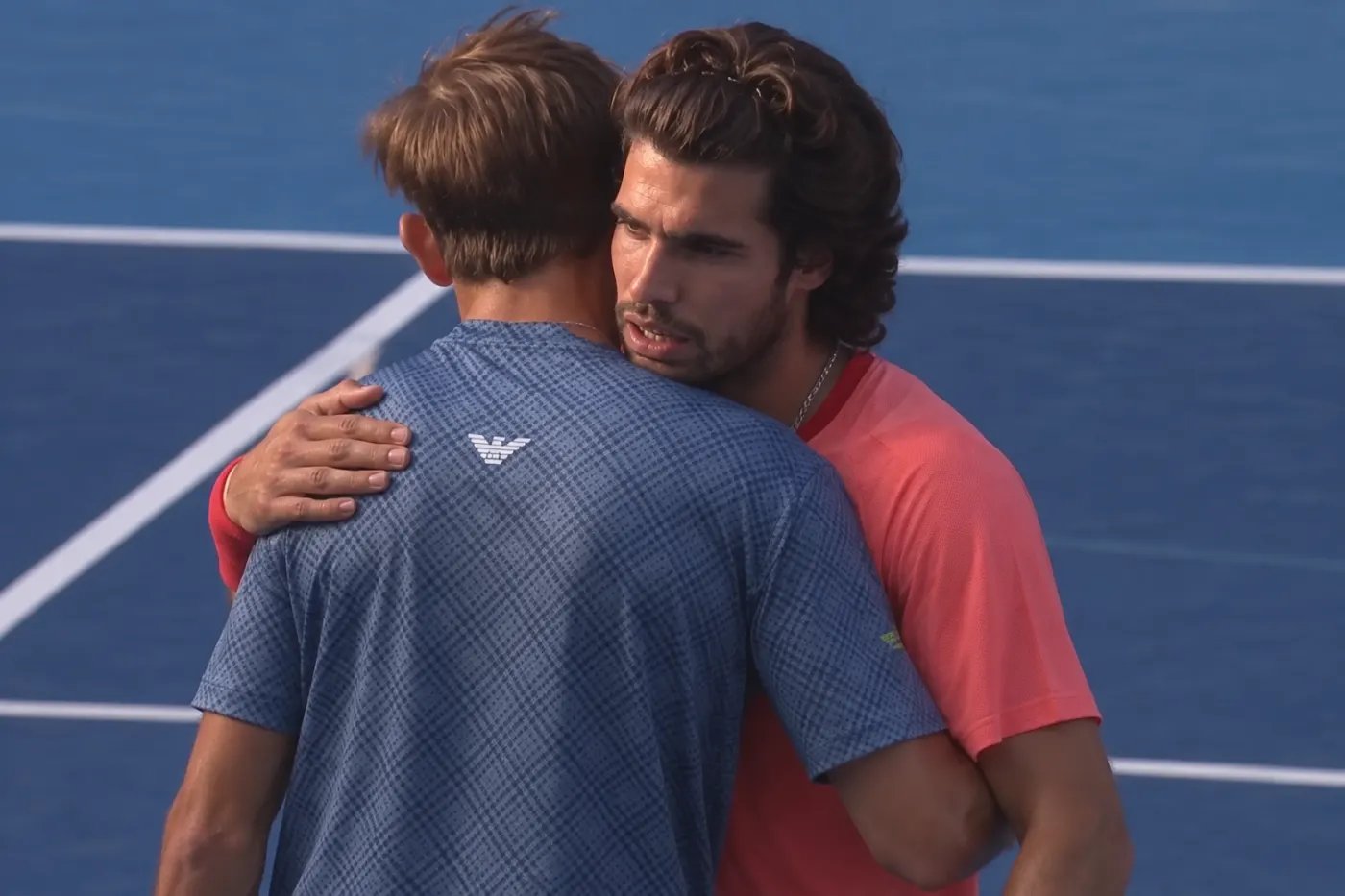
Carlos Alcaraz beat Matteo Arnaldi 7-6 (8-6), 6-1 in the Tokyo ATP 500 round of 16, one hour and forty-six minutes on the hard court at the Ariake Coliseum, after trailing 2-6 in the first-set tie-break. The turning point was a counterintuitive choice: take pace off the ball and send it to the same spot every time, the Italian's backhand.
Angles, no pace, everything to the backhand
Up to 6-2 in the tie-break, Arnaldi was winning the match from the baseline. He controlled the rallies with his forehand, took the initiative as soon as the ball arrived at the right height, and had reached 6-2 playing like he owned the court.
From there Alcaraz changed direction. He stopped matching pace with pace and went after the backhand side with angled, low-pace shots. Arnaldi's forehand feeds off the pace of the ball he receives: if it comes slow and wide, he has to generate everything himself, from an open stance with his feet planted. On top of that, Alcaraz returned only into the angles, putting him on defense as early as the second shot of the game.
Arnaldi had four set points and lost all of them. Alcaraz strung together six points in a row, took the lead with a veronica at the net, and closed it out 8-6.
The first serve covered for a second serve built to lose
Alcaraz carried a number through the whole match that usually belongs to the loser: just 26% of points won on his second serve. Flip it around, and the same figure shows that Arnaldi, returning Alcaraz's second serve, won 14 of 19 points, almost three quarters.
Alcaraz on second serve: 5 points won out of 19, 26%.
The numbers didn't blow up because Alcaraz landed 73% of his first serves and won 81% of points behind it. In a match decided by a tie-break, that percentage is the safety net: he played very few points from the position where he was vulnerable.
The double fault that opened the second set
Arnaldi hit the first double fault of his match in the opening game of the second set and handed over the break. The set was decided there: 6-1, with Alcaraz converting three break points out of seven and losing just one service game in the entire match.
The collapse has context. Since reaching the semifinal at Roland Garros, Arnaldi hasn't found consistent results. Against the world's top three, he's still at zero career wins.
Alcaraz is just back from his wrist problem, and the repeatable part of this match is the tie-break adjustment, more than the final 6-1. Against a player who builds points on the pace of the ball, slowing down and leaning on the weak side with wide angles works even when the serve doesn't hold up. The 26% on second serve, though, is a number that will cost more in the quarterfinals against Denis Shapovalov.