Sinner and Alcaraz, a Rivalry That Lasted One Afternoon
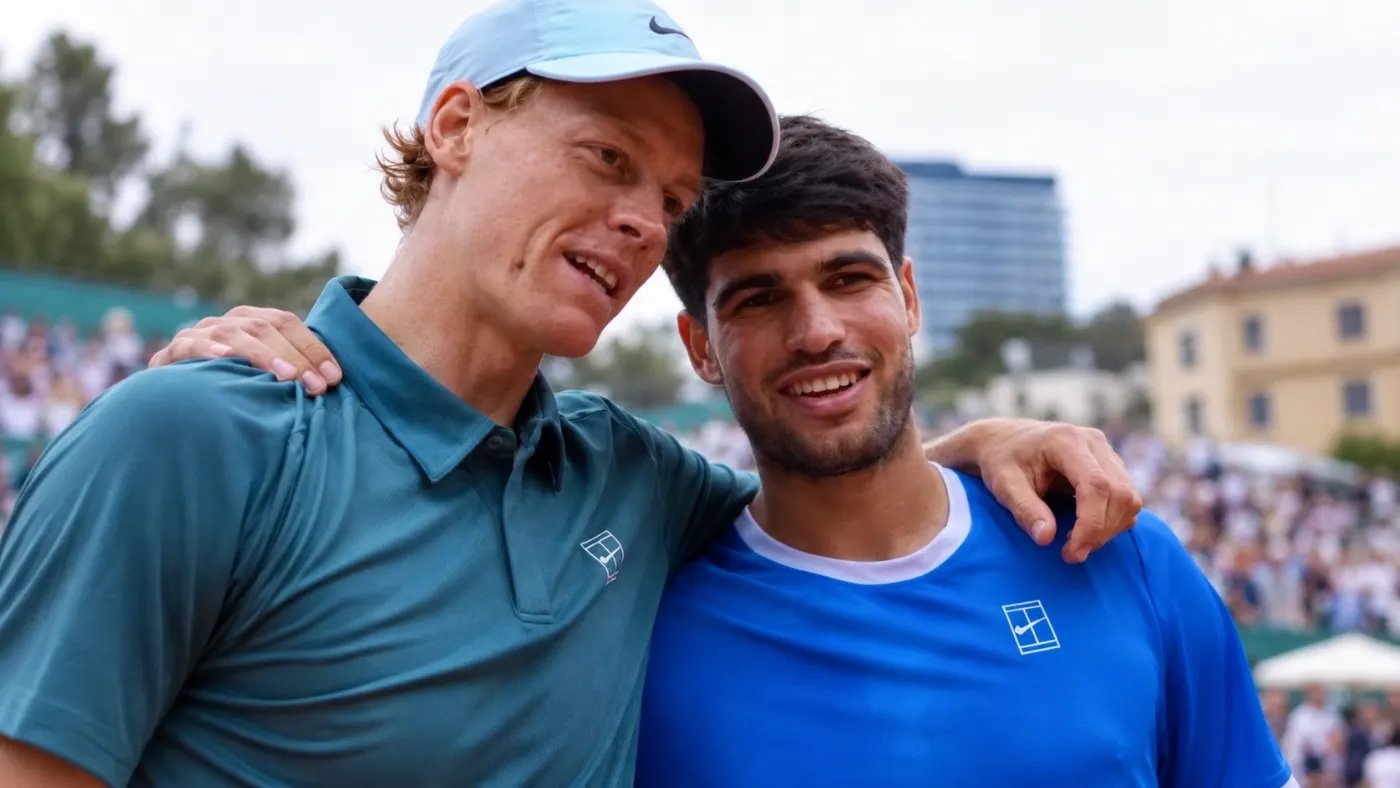
A rivalry seems like a solid thing. It lasts for years, fills the trophy case, gets told as if it were a permanent fixture of tennis, something that belongs to us. Then a season like this one comes along, and it turns out it stood on a single condition: two healthy bodies in the same fortnight.
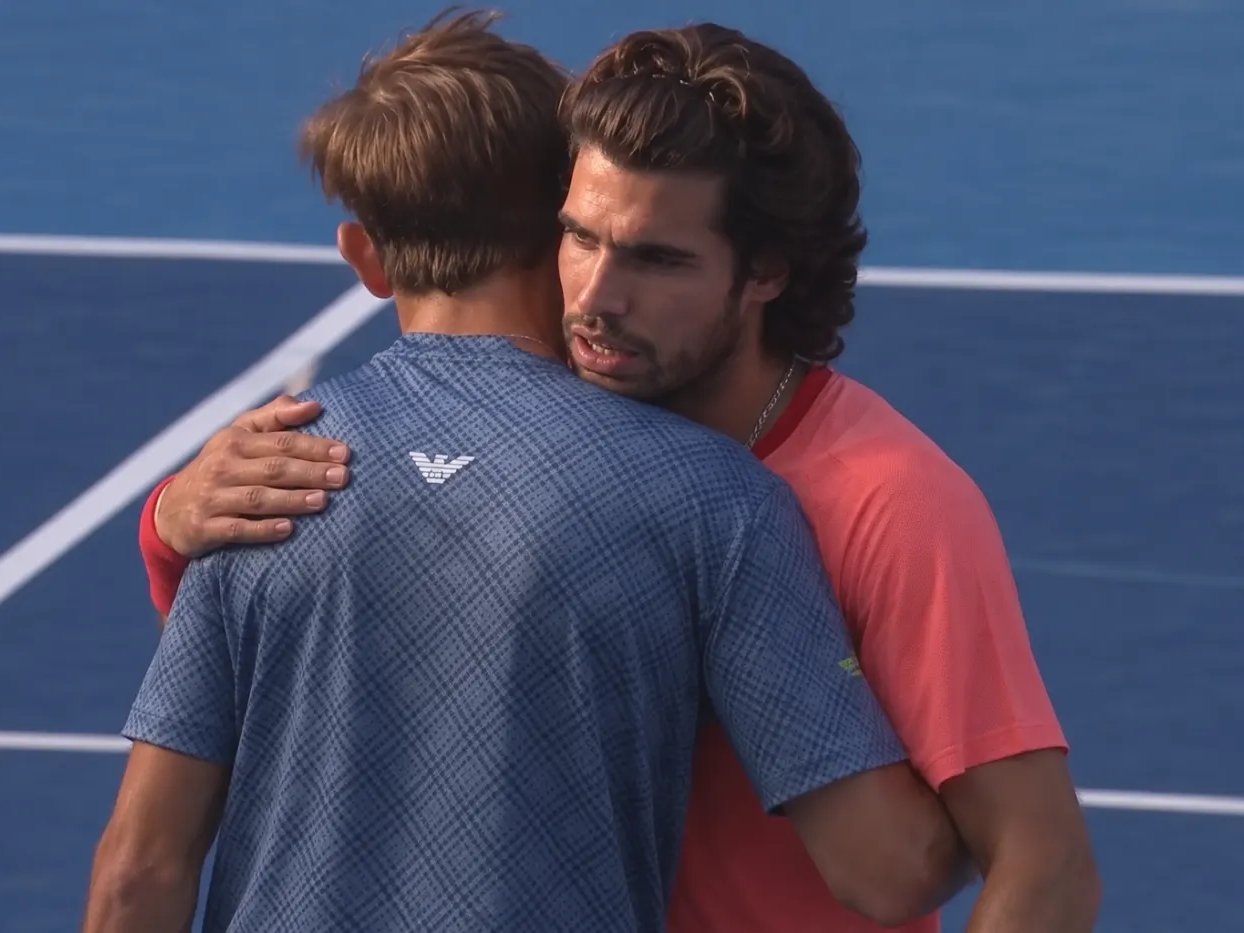
On April 12, in Monte Carlo, Jannik Sinner beat Carlos Alcaraz 7-6(5) 6-3 in a final that carried the world number one ranking. That handshake on the clay of the Country Club is the only moment in 2026 the two found themselves on the same court. Seventeen career meetings, only one this year. And for months nobody realized that was the end, not the beginning.
The Week After Monte Carlo
Alcaraz took the court in Barcelona the following week, played one match, and withdrew from the tournament. Tenosynovitis in the wrist. In the weeks that followed, the list of absences stopped resembling a setback: Madrid, Rome, Roland Garros as defending champion, Queen's as defending champion, Wimbledon.
Four months. At the start of the year he had won his first Australian Open, completing the career Grand Slam at twenty-two years and 272 days, the youngest ever. In the Melbourne semifinal he had beaten Alexander Zverev after five hours and twenty-seven minutes, the longest semifinal in the tournament's history. In April he was world number one. In June he was a name on the withdrawal list.
He came back at the US Open in late August, reached the quarterfinals, lost to Ben Shelton. No sporting disaster, to be clear. Just a whole year in which tennis kept happening without him.
Then the Other One Stopped Too
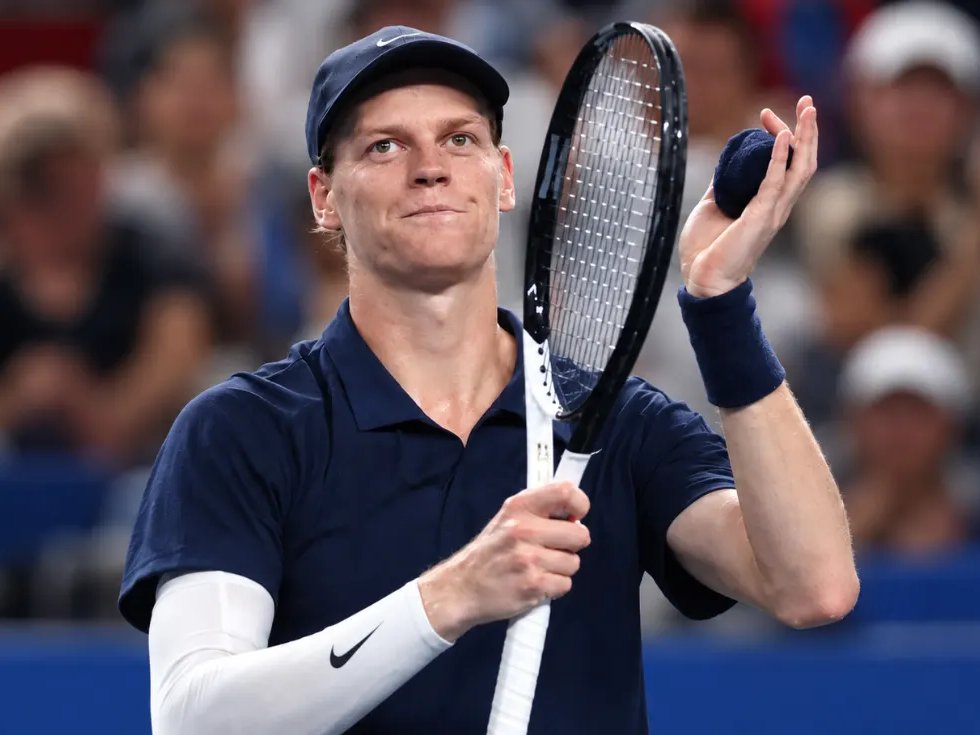
On paper, Sinner's 2026 is the best season of his career. Forty-four wins and three losses. Six titles: Indian Wells, Miami, Monte Carlo, Madrid, Rome, Wimbledon. At twenty-four he completed the career Golden Masters, all nine Masters 1000s, the youngest ever to do it. The only cracks: an Australian semifinal lost to Djokovic after leading two sets to one, and a second-round exit at Roland Garros against Juan Manuel Cerúndolo, ranked 56th, which snapped a streak of thirty consecutive wins.
Then on July 12 he defended Wimbledon, beating Zverev in the final, and hasn't played since.
Tendon inflammation in the right knee. No Toronto, no Cincinnati, no US Open. On September 25 he pulled out of Beijing too:
"My knee is not there where I would like to be".
His last official match remains a trophy lift, which makes the break almost invisible in the stats and very visible everywhere else.
Two different injuries, two different timelines, one identical effect. When one of them was on court, the other was out. Since mid-April the tour has never had them both at once, and between mid-July and late August it had neither.
The Void Had a Tenant
Anyone who thinks an absence is just a hole in the schedule hasn't been watching Alexander Zverev this year.
On June 7 he won Roland Garros against Flavio Cobolli in five sets, his first Slam after years of lost finals. On September 13 he won the US Open against Shelton. He's the fourth man in the Open era to claim his first two majors in the same season, after Connors, Vilas and, in 2024, Sinner. The German who in January had lost five and a half hours to Alcaraz in Melbourne finished the year with two Slams in the cabinet.
The 2026 Roland Garros also closed out a tally that had seemed like a law of nature: nine consecutive Slams won by Alcaraz or Sinner, from the 2024 Australian Open to Melbourne this year. The streak didn't end because someone beat them. It ended because one wasn't there and the other went out in the second round.
The two rankings tell two different seasons today. In the ATP ranking, Sinner is first with 11,500 points, 1,810 ahead of Zverev, because the fifty-two-week ranking still carries the memory of what he did in 2025. In the Race, which looks only at the current year, Zverev is ahead. The first ranking says who the best are. The second says who played.
What Gets Remembered
On September 24, at London's O2 Arena, where he had arrived for the Laver Cup, Alcaraz spoke about Sinner with the awkwardness of someone searching for words for a thing that has no precise name.
"I have text him not too much, but a few times when he has been winning everything, mostly at the beginning of the year. I miss him, I miss seeing him around, playing against him. He pushes me to be a better player. People will be waiting for those matches, so I think it's going to be better".
He was speaking on the eve of Sinner's announced return in Beijing. The next day, Sinner withdrew.
Calling it a lost year would be wrong. 2026 produced a career Grand Slam, a Golden Masters, Zverev's first two Slams, Cobolli's first major final. Tennis didn't stop.
What was missing is the thing men's tennis had learned to take for granted. Six finals in 2025, all of them between the two of them, from Rome to Turin. In 2026, one afternoon in April. A rivalry isn't an inheritance, it's a coincidence that keeps repeating: two players at the same level, in the same tournament, in the same week, with the same joints working. As long as it happens every month it feels like an entitlement. When it stops happening, you notice how unlikely it was.
Alcaraz leads 10-7. That number has been frozen since April, and for five months it's been the most useless thing in tennis: a scoreline for a matchup that wasn't happening. They will play each other again, probably soon, and that day nobody will talk about wrists and knees anymore. But for nearly all of 2026, the tour's most anticipated match existed only as a conversation.