The Eternal Lead: Kukushkin 1-0 Sinner
Tennis keeps a ledger that consoles no one. It's called the head to head, it lives at the bottom of players' profiles, and it outlives tournaments, rankings, entire careers. Two columns of numbers that explain nothing. They record only who won, and how many times.
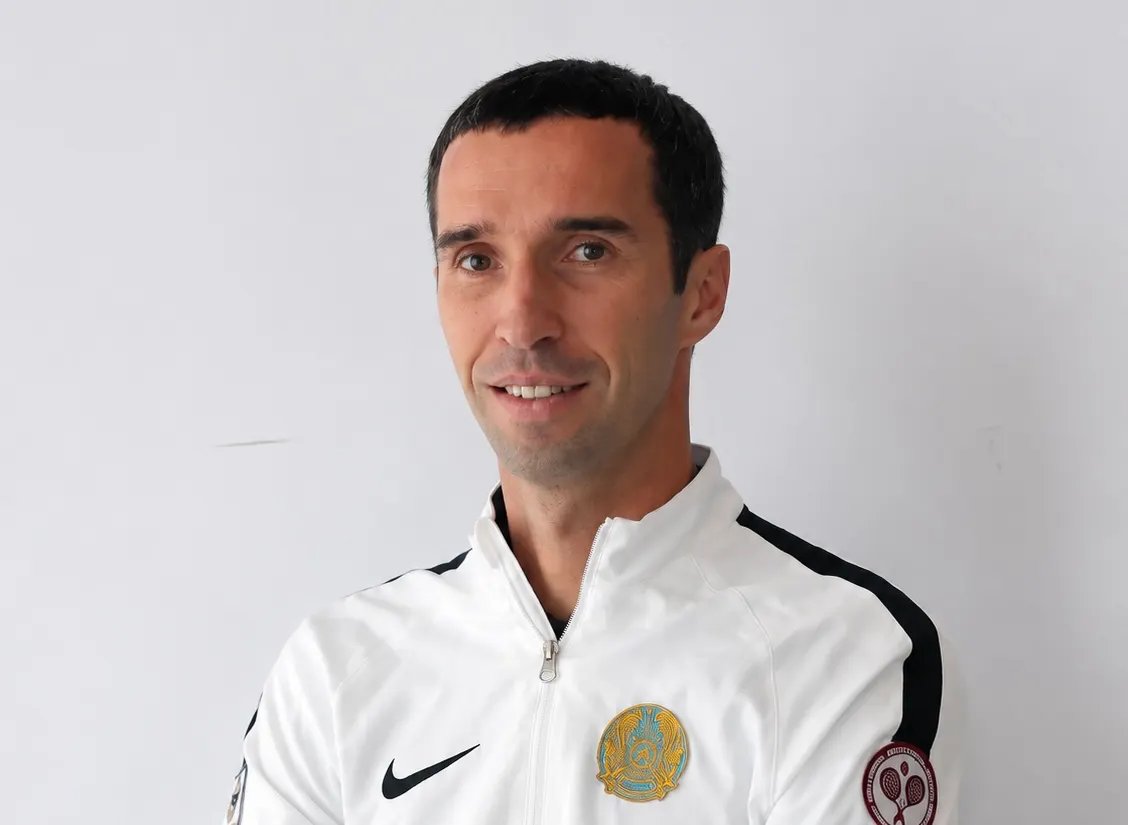
In that ledger, Mikhail Kukushkin leads Jannik Sinner 1-0. He's led it for seven years and will lead it forever, because the Kazakh is retiring: his last tournament is the Almaty Open, in October, at 38 and with a ranking that has slid past three hundred. Then he moves to the other side of the net, to coach.
"It's curious that I'm up 1-0 against Jannik Sinner,"
he told Ubitennis in his farewell interview. Curious. It's the word of a man who has understood, with precision, what will remain in his hands.
St Petersburg, twice
September 16, 2019, first round of the St Petersburg ATP 250, indoors. On one side of the court, Kukushkin, world number 57, thirty-one years old, in the best season of his life. On the other, a kid from Sesto Pusteria who had turned eighteen a month earlier, outside the top hundred, in the draw on a wild card. It finished 6-3 7-6(4) for the Kazakh, who managed the first set and then the tie-break like someone who had played those situations a hundred times.
Nine years earlier, at the same tournament, Kukushkin was the kid. October 2010, world number 88, in the final against top-ten player Mikhail Youzhny: 6-3 7-6(2). The only ATP title of his career. Almost the exact same score as the two matches St Petersburg gave him nine years apart.
Sinner, less than two months after that defeat, won the Next Gen ATP Finals in Milan. From there the path is the one we know: five Grand Slam titles and ninety-one total weeks at number one. They never met again. Kukushkin's ranking kept falling while Sinner's kept rising, the draws stopped intersecting, and that 1-0 froze right there, like a photograph taken before the story began.
The prison gym
Who the man behind that line is, the line doesn't say.
Kukushkin was born in Volgograd in 1987, in a place where indoor courts don't exist in winter. The solution came from an unlikely arrangement:
"We talked to the prison staff and managed to use a multi-purpose court."
He trained there, in a prison gym, in the months when you couldn't hit a ball outside. In 2008 he switches flags and moves to Kazakhstan, and in the interview he explains it without any rhetoric:
"I did it because I needed support for my tennis development."
His career-high ranking comes on February 25, 2019: number 39. At thirty-one. Most players hit their peak at twenty-five and then defend it; he got there when his peers were starting to organize their farewell exhibitions. In 2012 he becomes the first Kazakh to reach the fourth round of the Australian Open, in 2019 he does the same at Wimbledon, four times Kazakhstan reaches the Davis Cup quarterfinals with him on the team. His ATP-level record reads 175 wins and 239 losses: the math of someone who spent three quarters of his career playing matches the world wasn't watching.
"I'm still fairly satisfied with my career, and I have no regrets."
Then he admits there will always be some regret, but that it's hard to say which one. The two statements coexist in the same answer, and neither one is false.
What survives
Tennis's archive keeps things at random.
In twenty years no one will go looking for the 2010 St Petersburg final. Youzhny was a top-ten player, that title meant more to Kukushkin than anything else that happened to him on court, and it will stay a line in a table nobody opens. That line with Sinner's name on it, though, will get pulled up every time someone sits down to compile the list of who beat the number one before he became one. The journeyman gets preserved by the greatness that ignored him. It's a side effect of the archive, and it outlasts any plaque.
Kukushkin seems to have understood this before we did, and he tells it without inflating it. He says he realized Jannik was going to become a great player and probably a Slam champion, and in the next breath admits that back then no one could have been a hundred percent sure. Meanwhile he has already opened his academy in Marbella, the Mikhail Kukushkin High Performance Tennis Academy, where he'll be head coach to kids who were in kindergarten in 2019.
In the second half of October, in Almaty, he'll play his last match. He'll probably lose it, in front of a crowd that will applaud him for what he represented more than for what he won. The day after, the table will still read 1-0.